The Silent Root Killers Under Your Lawn
You water it. You fertilize it. You mow it every week. Then one August morning you look out and there is a dead brown patch that was not there on Monday. You figure it is drought stress, water it, and nothing happens. Then you grab a handful of that dead turf and pull, and it peels up like a cheap rug with nothing holding it down.
That is grub damage. And by the time you can see it, those grubs have already been feeding under your lawn for weeks.
White grubs, most commonly the larvae of the Japanese beetle, are one of the most destructive lawn pests in Worcester County and across Central Massachusetts. They spend most of their life underground, chewing through grass roots while you have no idea they are there. This guide will show you how to confirm it, how to treat it at the right time, and how to stop it from happening next year.
What Are White Grubs?
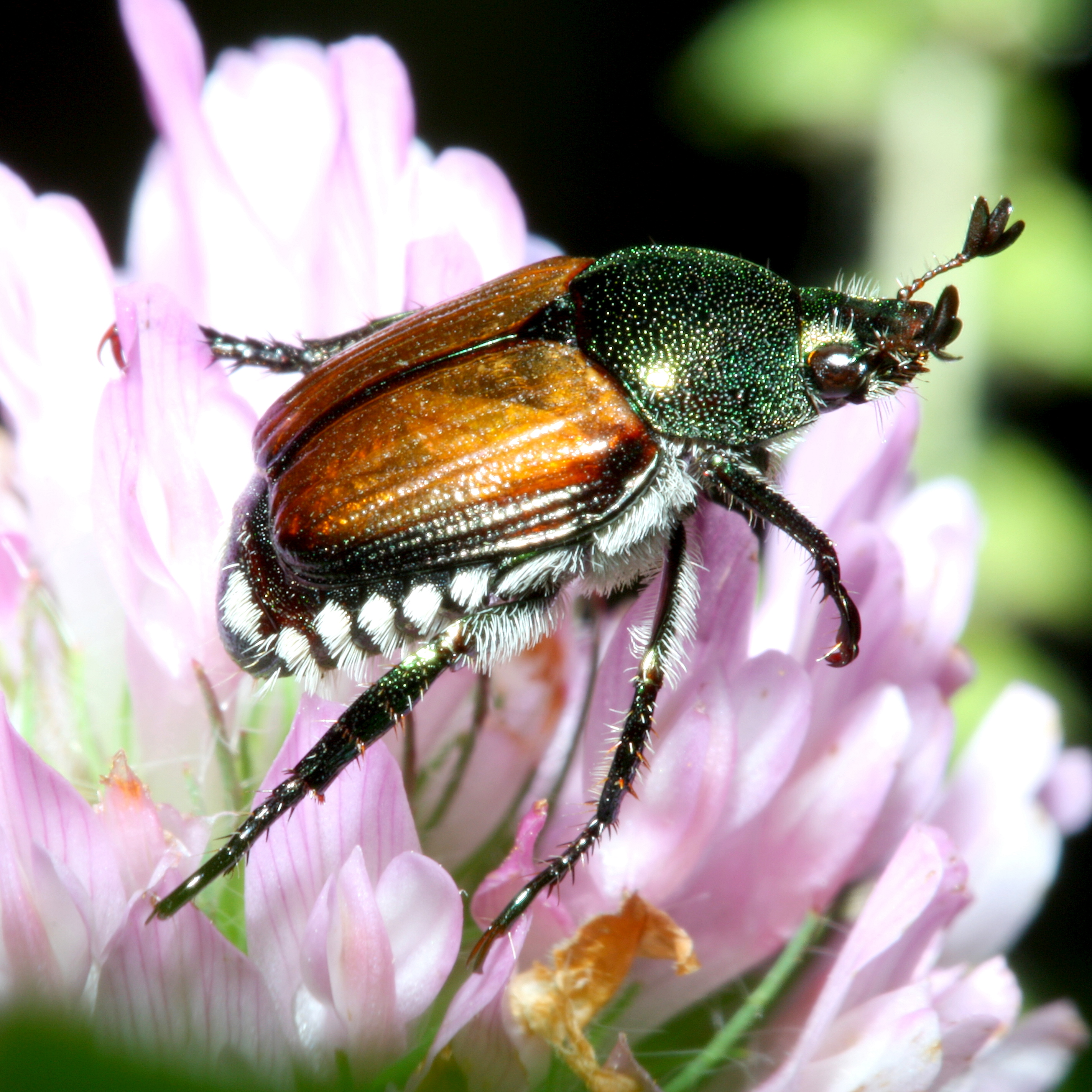
White grubs are the larval stage of several beetles, but in Worcester and Central Massachusetts, the Japanese beetle (Popillia japonica) is the primary culprit. You have definitely seen the adults: the metallic green-and-copper beetles that skeletonize rose bushes and linden trees in July.
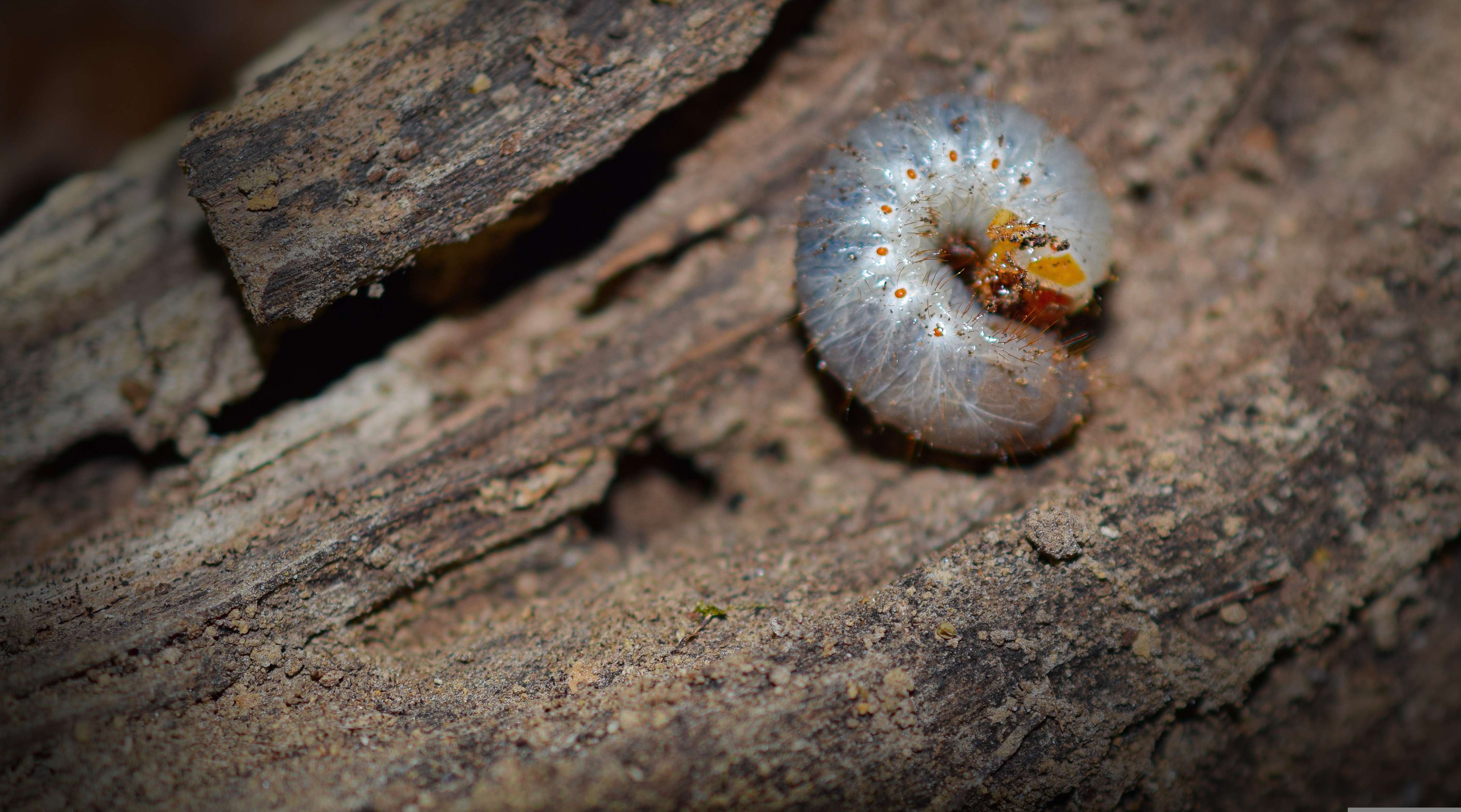
After mating in mid-summer, female Japanese beetles burrow into moist, grassy soil and lay 40 to 60 eggs just an inch or two below the surface. Those eggs hatch in late July and August into small, C-shaped white larvae with brown heads and six legs. They immediately begin feeding on the root zone of your turf, and they are hungry.
The grub life cycle in Worcester: Eggs hatch late July → larvae feed aggressively through September → grubs move deep to overwinter → return near surface in spring → pupate in late May/June → adults emerge and repeat.
The other grubs you might encounter in this area include chafer beetle larvae and oriental beetle larvae, which behave similarly and respond to the same treatments. The C-shaped white body with a tan head is the universal tell regardless of species.
How to Confirm You Have Grubs
Grub damage looks almost identical to drought stress at first glance: brown, dying patches of turf. The difference is that drought-stressed grass still has its roots intact and will recover with water. Grub-damaged turf has no roots left to hold it down.
The Tug Test
Grab a handful of the brown or dying grass and pull firmly. If the turf lifts up like a loose piece of sod with no resistance, grubs have severed the roots underneath. Drought-stressed turf resists and stays put.
The Dig and Count
Use a flat spade to cut and fold back a one-square-foot section of turf to about 3 inches deep. Count every C-shaped white grub you find. Use this threshold guide for Central Massachusetts:
Other Signs to Watch For
Wildlife Digging
Skunks, raccoons, and crows are relentless grub hunters. If they are tearing up sections of your lawn overnight, there is almost certainly a grub population worth treating. The animals are not the problem. The grubs are.
Spongy Turf
Walking across your lawn feels soft and spongy, even when it is not overly wet. This is the turf decoupling from the soil below as roots are destroyed, a textbook grub symptom that often shows up before visible browning begins.
Damage Timing
True grub damage peaks in August and September. If your brown patches appear in the heat of July and respond to irrigation, it is likely drought. If they appear in August and do not respond to watering, start digging.
Patch Shape
Grub damage often starts as irregular patches near trees, beds, or areas that stay moist, exactly where female beetles prefer to lay eggs. Drought damage tends to be more uniform across open, sunny areas.
Worcester-Specific Treatment Timing
Timing is everything with grub control. Apply the right product at the wrong time and you will waste money and still have grubs. The treatment window is driven entirely by the Japanese beetle life cycle, which is consistent across Central Massachusetts.
Your Treatment Options
Preventive Insecticides (Best Approach)
If you have had grub problems before, or your neighbors have, preventive treatment applied in June or early July is the most reliable and cost-effective approach. These products create a treated zone in the root area before eggs even hatch.
- Chlorantraniliprole (Scotts GrubEx, others): The gold standard. Longest window of effectiveness, very low toxicity to pollinators and earthworms. Apply May through mid-July. Water in with at least half an inch of irrigation.
- Imidacloprid (Bayer Grub Control, others): Effective, widely available, and less expensive. Apply mid-June through mid-July for best results. Avoid applying when lawn is flowering (skip the dandelions first).
Water is not optional. Preventive grub products are activated by moisture. Apply before rain or immediately water in with a half inch of irrigation. A dry product sitting on the surface for two weeks is wasted product.
Curative Insecticides (August–September Only)
If you confirm active grub damage in late summer and missed the preventive window, curative options can still knock down the population, but they work best on young, small grubs actively feeding near the surface.
- Trichlorfon (Dylox): Fast-acting, effective within days. Best applied in August when grubs are first-instar (small). Requires thorough watering in.
- Carbaryl (Sevin): Broad-spectrum, readily available. Works on larger grubs than trichlorfon. Broad activity means it will also affect beneficial insects, so use judiciously.
Read the label. Grub control products vary significantly in their timing requirements, application rates, and restrictions around water and pollinators. The label is the law. Follow it exactly. When in doubt, call us.
Organic & Natural Options
If you prefer to avoid synthetic insecticides, two biological options have genuine research behind them for Central Massachusetts conditions:
- Beneficial Nematodes (Heterorhabditis bacteriophora): Microscopic organisms that actively hunt grubs underground. Apply to moist soil in late July or August, water in immediately, and keep the soil moist for two weeks. Results are variable depending on soil conditions but can be effective in warm, moist summers.
- Milky Spore (Bacillus popilliae): A naturally occurring bacterial disease specific to Japanese beetle grubs. Effective but slow; it takes two to four seasons to fully establish in your soil. Best for long-term prevention, not immediate control.
Repairing Grub Damage
Treating the grubs stops the damage, but it does not bring dead grass back. Any area where roots were fully severed needs to be reseeded. Here is how to handle it:
- Rake out the dead material. Remove the dead turf and thatch. Get it off the soil surface so seed can make good contact.
- Loosen the top half inch of soil. A garden rake or dethatching rake works fine for small areas. For large patches, a power rake makes this faster.
- Overseed with the right blend. For Worcester, use a turf-type tall fescue or a quality sun/shade blend. Check our overseeding calculator for exact seeding rates based on your square footage.
- Keep it consistently moist. New seed needs moisture from germination through the first few mowings, typically two weeks of daily light watering, then transitioning to deeper, less frequent irrigation.
- Time it right. Early fall (late August through mid-September) is the best repair window in Worcester. Soil is warm enough for fast germination, summer heat is breaking, and cool-season grasses naturally want to grow. Avoid seeding in spring if you plan to apply crabgrass pre-emergent. The two do not mix.
After reseeding, hold off on any additional pesticide or herbicide applications until the new grass has been mowed at least two to three times. New seedlings are vulnerable. Give them time to establish before you stress them chemically.
Long-Term Prevention: Make Your Lawn Less Attractive
Female Japanese beetles are selective about where they lay eggs. They strongly prefer moist, thin, stressed turf in open, sunny areas. A thick, healthy lawn is genuinely harder for them to penetrate, which means your best long-term defense is basic good lawn care:
- Mow at the right height. Taller turf (3–3.5 inches for fescue) shades the soil, keeps it cooler, and is less inviting to egg-laying beetles.
- Water deeply but infrequently. Frequent shallow watering keeps the top inch of soil constantly moist, the ideal egg-laying zone. Water deeply once or twice a week instead and let the surface dry between sessions.
- Overseed thin areas every fall. Dense turf physically crowds out opportunities. Thin spots are where grubs, weeds, and every other lawn problem get their foothold. Check the overseeding calculator and fill in the gaps this September.
- Fertilize properly. A well-fed lawn recovers faster from grub feeding and stress. Our lawn care program includes a timed fertilization schedule tuned to Worcester's growing season.
Frequently Asked Questions
How do I know if grubs are killing my lawn?
Do the tug test: grab a handful of the dead grass and pull. If it peels up like a loose rug with no root resistance, grubs are almost certainly the cause. Confirm it by cutting a one-square-foot section 3 inches deep and counting the C-shaped white grubs. Five or more per square foot means treatment is warranted. Wildlife aggressively digging at your lawn (skunks, raccoons, crows) is another reliable indicator. They can smell the grubs and will tear up turf to get at them.
When is the best time to treat for grubs in Worcester?
Mid-June through mid-July is the preventive window: apply before eggs hatch and water in thoroughly. If you missed that and have confirmed damage, August through early September is the curative window when grubs are small and actively feeding near the surface. Do not treat in October; grubs have moved too deep for most products to reach. Do not treat in spring; the brief window when they return to the surface, they stop feeding and the treatment is wasted.
Will grub damage repair itself without reseeding?
Small patches (a few square feet) in an otherwise thick lawn sometimes fill in on their own if the surrounding turf is healthy. Anything larger, or any area where the roots were completely severed, needs to be reseeded. Treat the grubs first, then rake out the dead material, loosen the soil, and overseed in early fall. Use our overseeding calculator to get your seeding rate right.
Are organic grub treatments effective?
Beneficial nematodes (Heterorhabditis bacteriophora) work if applied to moist soil in late July or August and kept watered. Results vary with soil conditions and summer heat. Milky spore works but takes several seasons to build up in the soil. It is a long-game prevention strategy, not an immediate fix. Neither organic option matches the consistency of preventive synthetic products, but both are legitimate choices for those avoiding chemicals.